
Melanoma Treatment in Miami
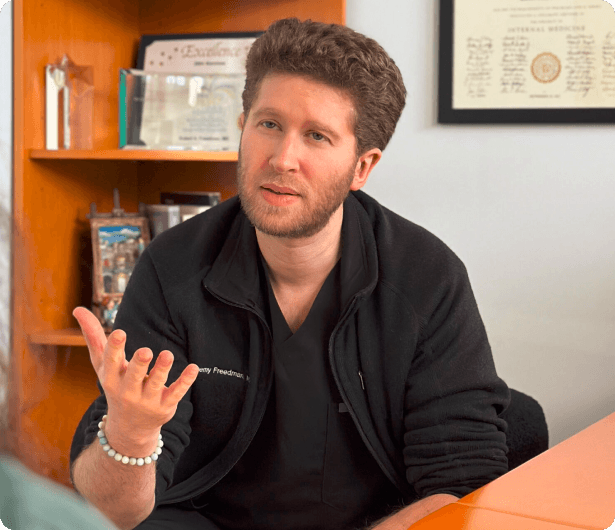
Dr. Freedman is a fellowship-trained, double board-certified Mohs surgeon specializing exclusively in precise treatment for melanoma with a focus on early detection, complete removal, and optimal cosmetic outcomes.
Early evaluation is critical—especially for changing moles or newly diagnosed melanoma.
One of the most life-threatening forms of skin cancer, requires precise surgical removal
High-accuracy approach focused on complete cancer removal
Most insurances covered, even out of state
Affordable self-pay options available
Immediate scheduling available
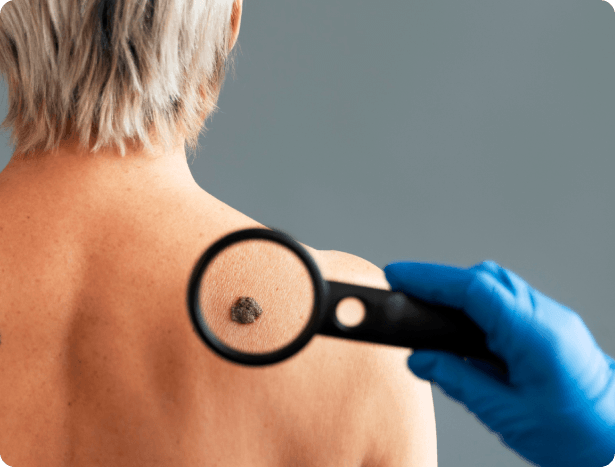
What Is Melanoma?
Melanoma is one of the most serious form of skin cancer. Luckily, when caught early, it is highly treatable.
Melanoma develops in the pigment-producing cells of the skin. While often linked to sun exposure, it can appear anywhere on the body — even in areas that don’t get much sun.
Because melanoma has a higher risk of spreading, early detection and treatment are critical.
When Should Melanoma Be Treated?
Melanoma should be evaluated and treated as soon as it is suspected.
Keep a look out for:
- A new or changing mole
- Irregular borders or uneven color
- A spot that looks different from others
- A lesion that continues to evolve
If something looks unusual, it’s important to have it examined promptly.
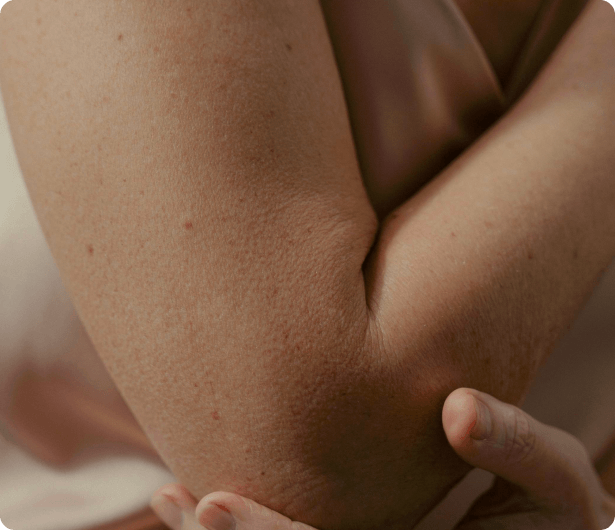
How Is Melanoma Treated?
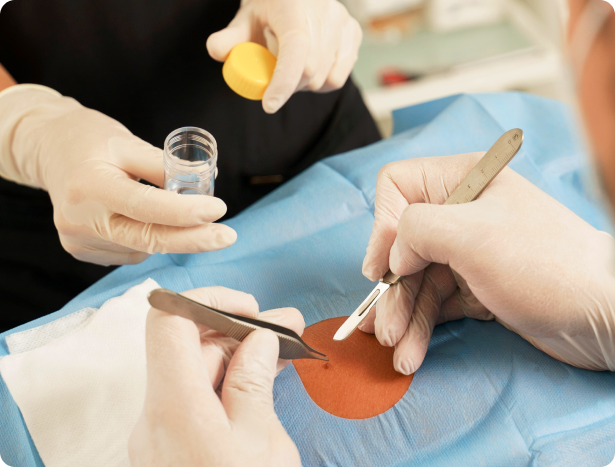
Melanoma is most commonly treated with a procedure called a wide local excision, which involves removing the cancer along with a margin of surrounding healthy tissue.
The size of this margin depends on how deep the melanoma is, but in many cases, at least 1 cm of tissue is removed around the tumor.
This approach is effective and remains the most commonly used treatment for melanoma, helping ensure the cancer is fully removed.
Who Performs This Procedure?
Wide local excision is commonly performed by dermatologists, ENT specialists, or plastic surgeons. However, Mohs surgeons are often involved in melanoma treatment due to their advanced surgical training, precision, and experience with complex facial reconstruction.
Where Does Mohs Surgery Fit In?
Traditional Mohs surgery is typically reserved for very early melanoma (melanoma in situ) or select cases in cosmetically sensitive areas.
An Alternative Approach: Slow Mohs (Staged Excision)
In certain cases, a staged approach, often referred to as “Slow Mohs,” may be recommended.
This technique allows for complete evaluation of the entire surgical margin before final closure, helping ensure all cancer is removed before the area is closed, minimizing the chance of needing to come back for another major procedure.
With over 3,000+ successful Mohs surgeries performed, Dr. Freedman brings a high level of precision, experience, and individuality to every case, helping patients with even the most complex cases achieve optimal medical and cosmetic outcomes.
Why Choose Miami Mohs Specialists

Specialized in Mohs & Skin Cancer Surgery
Dr. Freedman specializes exclusively in Mohs surgery, providing highly focused expertise in skin cancer treatment.

Fellowship-Trained & Double Board-Certified
Advanced training and dual board certification ensure the highest level of precision and care.

Immediate Appointments Available
Appointments are available within days, so you can receive timely treatment without unnecessary delays.

A Seamless Extension of Your Derm
Our practice is structured to integrate smoothly with your existing dermatologist, ensuring a seamless referral process and continuity of care from diagnosis through treatment and back to their office.
Have questions or ready to book your consultation?
Understand Your Treatment Options
Wide Local Excision vs. Slow Mohs for Melanoma
In wide local excision, tissue is carefully examined in sections, sometimes referred to as “bread-loafing,” by evaluating key areas such as the outer edges and representative portions of the specimen to determine whether cancer remains.
Slow Mohs uses a different pathology process that allows for complete evaluation of the entire surgical margin, making it the most comprehensive and definitive way to confirm that all cancer has been removed.
| Wide Local Excision | Slow Mohs (Staged Excision) | |
|---|---|---|
| How It Works | The visible melanoma and a measured border of healthy-looking skin surrounding the tumor are removed in one visit, and the tissue is sent to a lab for the margins to be reviewed | Tumor is removed and the margins are analyzed histologically to ensure all cancer has been completely removed before closure is performed. Completed in stages over multiple days. |
| Margin Evaluation | Representative portions are examined to determine if cancer is still present. | 100% of the entire surgical margin is evaluated |
| Timing | Lab results in approximately 1–2 weeks | Lab results in 24–72 hours. Patient returns to either remove more tissue, if needed, or to close the wound. |
| Number of Visits | Removal is completed in one visit. Additional surgery may be required after initial healing if cancer is found to still be present. | Multiple visits often required |
| Key Advantage | Fast, effective, and widely used standard treatment with no delay between cancer removal and closure | Most comprehensive and definitive margin assessment |
Wide Local Excision
How It Works
Tumor is removed and the margins are analyzed histologically to ensure all cancer has been completely removed before closure is performed. Completed in stages over multiple days
Margin Evaluation
Small representative portions are examined to determine if cancer is still present
Timing
Lab results in approximately 1-2 weeks
Number of Visits
Removal is completed in one visit. Additional surgery may be required after initial healing if cancer is found to still be present
Key Advantage
Fast, effective, and widely used standard treatment with no delay between cancer removal and closure
Slow Mohs (Staged Excision)
How It Works
Tumor is removed and analyzed before closure, allowing margins to be adjusted based on where cancer is actually present. Completed in stages over multiple days
Margin Evaluation
100% of the entire surgical margin is evaluated
Timing
Lab results in 24–72 hours. Patient returns to either remove more tissue, if needed, or to close the wound
Number of Visits
Multiple visits often required
Key Advantage
Most comprehensive and definitive margin assessment
Not sure which option is right for you? Call to schedule an appointment—our experienced team will walk you through your options and help determine the best approach for your care.
What to Expect During Melanoma Treatment
Treatment for melanoma depends on the stage, depth, and approach used. For many patients, the process involves the following steps:
Step
1
Step 1
Local Anesthetic Applied
The area is numbed using local anesthesia to ensure your comfort throughout the procedure. You remain awake, but should not feel pain during treatment.

Step
2
Step 2
Precise Tumor Removal
The melanoma is carefully removed along with a margin of surrounding tissue. The size of this margin is determined based on the depth and characteristics of the melanoma to ensure appropriate treatment.
Step
3
Step 3
Tissue Evaluation
The removed tissue is carefully analyzed to determine whether any cancer cells remain at the edges, or margins.
- With wide local excision, the tissue is sent to an external lab for permanent section analysis. Results are typically available in about a week or two. The wound is closed the day of your procedure.
- With staged excision (Slow Mohs), the tissue is processed using a specialized method that allows for complete examination of the entire surgical margin. Instead of evaluating only small sections, the pathologist can assess the full edge of the removed tissue and identify exactly where any remaining cancer cells are located, helping determine whether additional tissue needs to be removed or if the area can be safely closed.
Step
4
Step 4
Reconstruction
Reconstruction is designed to support proper healing while minimizing visible scarring, especially in cosmetically sensitive areas like the face.
- With wide local excision, the wound is repaired immediately on the same day, with no delay.
- With staged excision / Slow Mohs, the area is left open and carefully bandaged. Reconstruction is delayed until the doctor confirms that the cancer has been completely removed.
Step
5
Step 5
Additional Treatment (If Needed)
If cancer cells are found at the margins, additional treatment is performed to fully remove the remaining cancer.
- With wide local excision, this usually means returning for a separate procedure after healing to remove more tissue.
- With staged excision (Slow Mohs), additional tissue is removed in a targeted, stepwise manner, based on the detailed margin findings—helping preserve as much healthy tissue as possible.
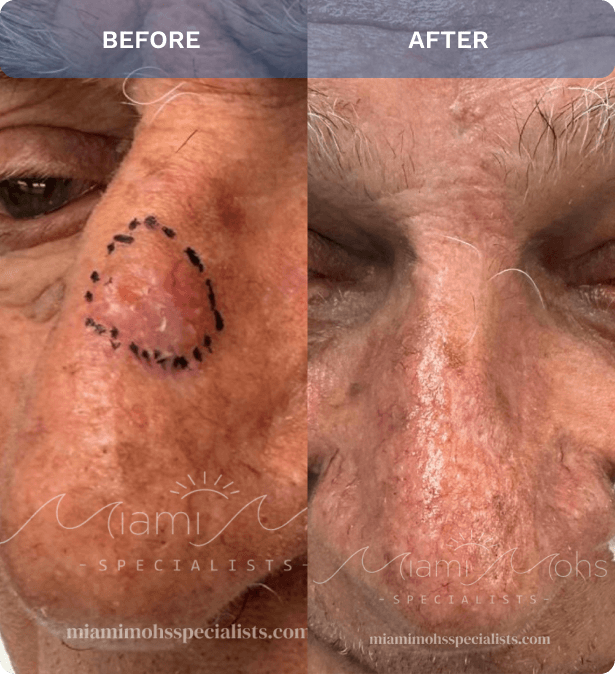
Reconstruction After Melanoma Removal
One of the biggest concerns we hear patients have is: “What will this look like after?
Following melanoma removal, reconstruction is performed with careful attention to both function and appearance, especially in highly visible areas like the face.
Dr. Freedman is highly experienced in performing closures designed to optimize healing and cosmetic outcomes.
For patients who prefer, reconstruction can be coordinated with a plastic surgeon. In these cases, the plastic surgeon may charge an additional fee for the closure portion of the procedure.
What People Say About Us
Nothing means more to us than the trust of our patients. Read what they have to say about their experience and the care they received.
For Referring Physicians
Referring a patient with melanoma? We offer:
- Rapid scheduling for urgent cases
- Clear, timely communication throughout treatment
- A seamless extension of your practice, ensuring continuity of care from diagnosis through treatment and back to your office
Frequently Asked Questions
What does early melanoma look like?
Early melanoma often appears as a new or changing spot on the skin. It may have irregular borders, uneven color, or look different from other moles. Some melanomas follow the “ABCDE” warning signs:
- Asymmetry
- Border irregularity
- Color variation
- Diameter larger than a pencil eraser
- Evolution over time
Not all melanomas look the same, which is why any spot that seems unusual or continues to change should be evaluated by a specialist as soon as possible. Early detection allows for simpler treatment and significantly better outcomes.
Call today to request an appointment.
Is Mohs surgery used for melanoma?
Melanoma is most commonly treated with a wide local excision, where the cancer is removed along with a margin of surrounding tissue.
In select cases, particularly melanoma in situ or very early-stage melanoma on the face, traditional Mohs surgery may be used. More commonly, a staged approach such as Slow Mohs (staged excision) may be recommended when more precise margin evaluation is needed to ensure complete cancer removal while preserving as much healthy tissue as possible.
Is the procedure painful?
No. Local anesthesia is used to keep you comfortable throughout the entire procedure. Learn more about how Mohs works here.
How long does treatment take?
Treatment time depends on the approach used.
- With wide local excision, the procedure is typically completed in one visit, with results from the lab available in about a week or two.
- With staged excision (Slow Mohs), treatment may take place over several days, as tissue is analyzed between stages to ensure all cancer is removed before final closure.
Your care team will walk you through the expected timeline based on your specific diagnosis and treatment plan.
Will I have a scar?
Any surgical procedure will result in a scar, but every effort is made to minimize its appearance. Reconstruction is performed immediately after cancer removal using advanced techniques designed to preserve your natural features and optimize healing, especially in highly visible areas like the face. You can view real patient outcomes in our Before & After Gallery. Based on patient preference, collaboration with a plastic surgeon is also available for closure and reconstruction.
Is removal covered by insurance?
We work with a variety of insurance providers. Check out our Insurance & Pricing page or give us a call to verify your coverage.
Miami Mohs Specialists: Your Skin Cancer Treatment Experts
Get Expert Melanoma Treatment in Miami
Early, precise treatment leads to the best outcomes.
Whether you are a patient seeking care or a physician referring a patient, our team is here to help.